Understanding HIV Prevention Options: Oral PrEP, CAB-LA, Lenacapavir, and the PrEP Ring
By Tendai Mumba, BScN, HNP Registered Nurse, HIV Prevention Advocate, and Health Educator on June 6, 2026
Expanding Choices in HIV Prevention
As a nurse and HIV prevention advocate, I have witnessed the importance of providing people with accurate information and empowering them to make informed decisions about their health. HIV prevention has advanced significantly over the years, and today individuals have more options than ever before to protect themselves from HIV infection.
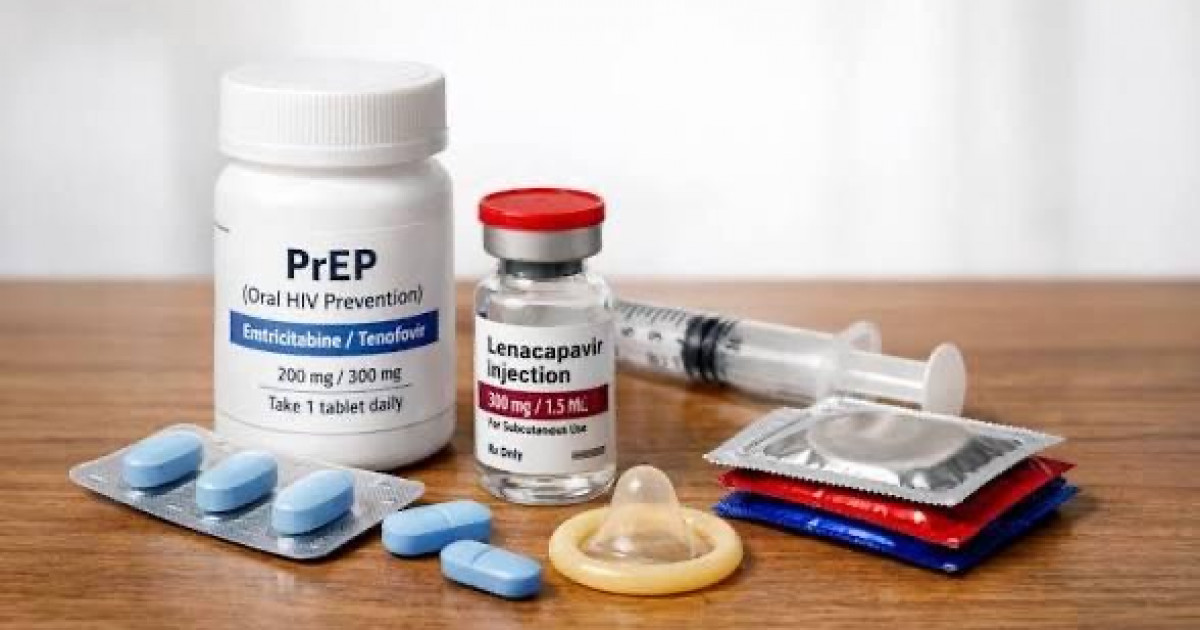
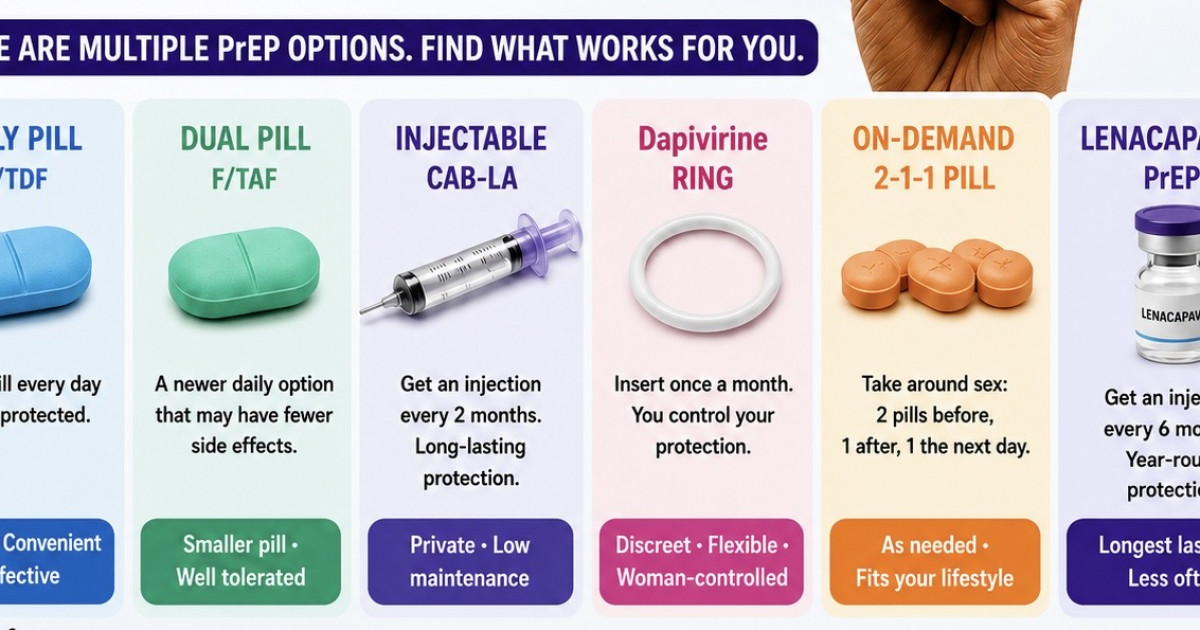
PrEP (Pre-Exposure Prophylaxis) is one of the most effective HIV prevention strategies available for HIV-negative individuals at risk of acquiring HIV. Beyond the traditional daily pill, newer options such as Injectable CAB-LA, Lenacapavir, and the Dapivirine Vaginal Ring are expanding access and offering greater flexibility.
Understanding these options is essential because HIV prevention is not a one-size-fits-all approach. Each method has unique benefits, and the best choice is often the one that aligns with an individual’s lifestyle, preferences, and healthcare needs.
1. Oral PrEP
Oral PrEP involves taking HIV prevention medication before potential exposure to HIV and remains one of the most widely used HIV prevention methods.
Who can use it?
- HIV-negative individuals at substantial risk of HIV infection.
- Sexually active men and women.
- Serodiscordant couples, where one partner is HIV-positive and the other is HIV-negative.
- Key populations at increased risk of HIV.
How is it taken?
- One tablet is taken daily as prescribed.
- Oral PrEP should be taken for 7 consecutive days before full protection is achieved.
- During these first 7 days, individuals should use condoms or abstain from sex to reduce the risk of HIV acquisition.
- After the initial 7 days, continue taking one tablet every day for ongoing protection.
When stopping Oral PrEP
- Do not stop immediately after your last possible exposure to HIV.
- Continue taking Oral PrEP for 7 days after the last possible exposure to HIV to maintain protection.
Benefits
- Highly effective when taken correctly.
- Convenient and widely available.
- Suitable for both men and women.
2. Injectable CAB-LA
CAB-LA is a long-acting injectable form of HIV prevention that eliminates the need for daily pills and provides a convenient alternative for individuals who prefer less frequent dosing.
Who can use it?
- HIV-negative adolescents and adults at risk of HIV infection.
- Individuals who prefer not to take daily medication.
- People who have difficulty adhering to daily Oral PrEP.
How is it administered?
- CAB-LA is injected into the buttocks by a trained healthcare provider.
- After receiving the first injection, a second injection is given after 1 month.
- Thereafter, injections are administered every 2 months.
Important Information When Stopping CAB-LA
- Speak to your healthcare provider before stopping CAB-LA.
- CAB-LA remains in the body for a prolonged period after the last injection.
- To continue preventing HIV and reduce the risk of developing antiretroviral resistance, you may need to switch to another HIV prevention method for up to one year after discontinuing CAB-LA.
Benefits
- No daily pill burden.
- Highly effective in preventing HIV infection.
- Discreet and convenient for individuals who prefer long-acting protection.
3. Lenacapavir (Len)
Lenacapavir is a newer long-acting HIV prevention option that offers extended protection with fewer clinic visits.
Who can use it?
- HIV-negative individuals at risk of HIV infection.
- People seeking a long-acting prevention method with fewer healthcare visits.
How is it administered?
- Administered as a subcutaneous injection by a trained healthcare provider.
How long does it last?
- One injection provides protection for approximately 6 months before the next dose is required.
Benefits
- Long-lasting protection.
- Fewer clinic visits.
- May improve adherence compared to daily oral medication.
4. The Dapivirine Vaginal Ring (PrEP Ring)
The Dapivirine Vaginal Ring, commonly known as the PrEP Ring, is a flexible silicone ring containing an antiretroviral medication that helps reduce the risk of HIV infection.
Who can use it?
- HIV-negative women and adolescent girls.
- Women who prefer a female-controlled HIV prevention option.
How is it used?
- The ring is inserted into the vagina and worn continuously.
How long does it last?
- One ring provides protection for 28 days.
- It should be replaced with a new ring every month.
Benefits
- Woman-controlled HIV prevention.
- Discreet and easy to use.
- Does not require daily pill-taking.
The Power of Choice
One of the greatest achievements in HIV prevention is that people now have options. What works for one person may not work for another, and that is perfectly okay. The availability of Oral PrEP, CAB-LA, Lenacapavir, and the PrEP Ring allows individuals to choose a prevention method that best fits their lifestyle, preferences, and health needs.
Final Message
The future of HIV prevention lies in choice. With Oral PrEP, CAB-LA, Lenacapavir, and the PrEP Ring, individuals can select a prevention method that works best for their lives and circumstances.
As healthcare professionals and advocates, our role is to ensure that people have access to accurate information and quality services so they can make informed decisions about their health.
Together, through education, access, and innovation, we can continue moving toward a future with fewer new HIV infections and healthier communities.
Prevention is Power. Protection is Choice.